

GOMASOBA Is Washoku: A New Expression of Japanese Cuisine


What Is Washoku? GOMASOBA: A Japanese Dish That Represents Japanese Cuisine
For many years, people around the world have searched for Japanese cuisine through sushi, tempura, ramen, and wagyu.
But I have always had a different question.
Can a single dish express the philosophy of Washoku itself?
After more than 45 years devoted to cooking and 14 years serving GOMASOBA, I believe I have found my answer.
That answer is GOMASOBA.
GOMASOBA Is Washoku
Japanese cuisine is more than recipes.
It is the beauty of a sumi-e painting.
It is the expression of the four seasons.
It is respect for nature, local climate, and local ingredients.
It is gratitude.
It is balance.
It is caring for the body while nourishing the spirit.
For many years, I wondered if all of these ideas could be gathered into a single dish.
Not sushi.
Not tempura.
Not sukiyaki.
A dish that represents the philosophy of Japanese cuisine itself.
GOMASOBA was born from that question.
The Inspiration: Gojiru
At the heart of GOMASOBA is an old Japanese countryside dish called Gojiru.
Gojiru is not unique to one region.
It exists throughout Japan in many local forms.
The dish is made by grinding soybeans and transforming them into a nourishing soup.
It reflects a way of thinking that values every ingredient and wastes nothing.
For over fourteen years, I have continued to cook with soybeans and study this tradition.
Miso.
Soy sauce.
Tofu.
Natto.
Gojiru.
Soybeans are one of the foundations of Japanese food culture.
GOMASOBA takes the philosophy of Gojiru and expresses it through soba.
Tradition Meets Science
Throughout my journey, I also pursued modern nutritional knowledge.
My restaurant received a two-star Smart Meal certification, connecting traditional Japanese food wisdom with scientific approaches to health and balanced eating.
For me, Washoku is not only tradition.
It is also practical wisdom for healthy living.
GOMASOBA is where these two worlds meet.
What Is GOMASOBA?
GOMASOBA begins with a bowl made from ground soybeans and rich black sesame paste.
Japanese dashi is added, and the flavor is balanced with soy sauce.
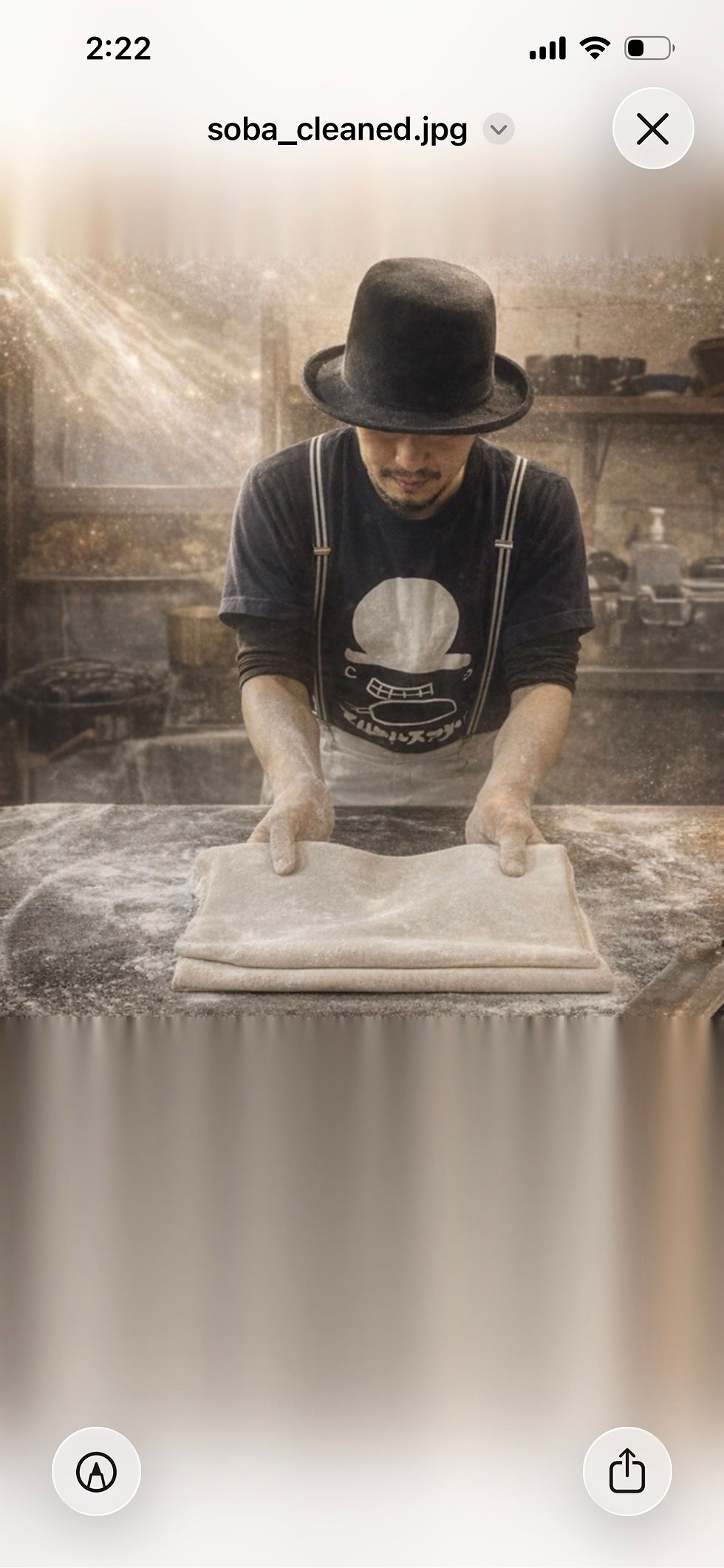
Into this bowl goes handmade 100% buckwheat soba made from whole-ground buckwheat flour.
The soba is enjoyed by dipping and lifting it through the fragrant sesame and soybean broth.
The bowl itself is served in an iron pot to retain warmth.
Seasonal vegetables, local meats, mushrooms, and regional ingredients can be added, allowing each place to express its own climate and culture.
After finishing the soba, the remaining broth is transformed once more.
Brown rice is added.
Egg is gently folded in.
The result is a nourishing medicinal rice porridge.
Nothing is wasted.
Everything is appreciated.
The meal ends with gratitude.
“Thank you.”
“It was a wonderful meal.”
Why I Believe GOMASOBA Represents Washoku
Washoku is not simply about flavor.
It is about harmony.
It is about using ingredients completely.
It is about respecting nature.
It is about caring for health.
It is about gratitude.
GOMASOBA contains soybean culture, sesame culture, dashi culture, seasonal expression, and the spirit of nourishment.
That is why I say:
GOMASOBA is Washoku.
As interest in Japanese culture continues to grow through anime, manga, games, and art, people will eventually search for the deeper philosophy behind Japan.
When that moment comes, I hope GOMASOBA can be one answer.
Not as a soba dish.
Not as a regional specialty.
But as a dish that expresses the spirit of Japanese cuisine itself.
GOMASOBA: Connecting Japan and the World Through Washoku.
— SOBA TAKANO
Kameido, Tokyo, Japan 🇯🇵


コメント